Frustrated with current state oil and gas regulations and tired of the lack of planning at either the state or county level, a number of citizens directly impacted by the oil and gas boom in Garfield County have taken a different approach - they have negotiated directly with the industry. Their efforts over the last several months are on the cutting edge of ways to plan for natural-gas development in the Intermountain West
The Rifle/Silt/New Castle Community Development Project began earlier this year when residents in and around these communities realized that drilling in their neighborhoods was inevitable given the gas reserves in the county, current state regulations, and the nation's insatiable demand for natural gas.
Organized under the auspices of the Grand Valley Citizens Alliance, community members began talking with Antero Resources, which has purchased leases in the area, to encourage them to work with neighborhoods and communities in crafting their drilling plans, not just surface and mineral owners.
The resulting plan recommends clustering drilling on pads spaced from 640 to 160 acres apart. Clustering would minimize construction of roads, pipelines and other accouterments of drilling and thereby lessen impacts. The plan would also include best management practices for natural-gas drilling such as placing pipelines alongside or in existing roads, piping water to wells rather than trucking it in, and installing equipment to reduce toxic emissions, reduce noise and light. Drilling rigs would also be at least 500 feet from the nearest homes.
Antero Resources has adopted this collaboratively created plan, and citizens are beginning talks with other gas operators as well as local governments.
You can view a PDF version of the document, which is still a working draft, at www.hmccolorado.org/GVCAPLAN-11-2005.pdf

Wednesday, December 7, 2005

Western cities embracing transit
 Alan Best's article in High County News (Back on Track, 11.14.2005) was a great piece on how several Western U.S cities are entering a new transportation paradigm -- one focused on livability rather that traffic mitigation, and transportation options rather than exclusive reliance on roads and highways.
This is no small feat, like all Americans, Westerners love their cars, but local business, community and elected leaders are realizing that transit has an equally important role in their future.
The only thing missing in the article (and this is probably a space constraint rather than an oversight) was a recognition of the many non-governmnetal organizations (like the Transit Alliance in Denver) that helped build the transit vision and then did education and outreach to help in implementation. As the article illustrated, elected leadership and foward thinging planners are crucial to transit success, but with out organized commuity groups and non-profit organizations that can educate, advocate, and mobilize, transit efforts are missing the third leg of the stool of success.
Tuesday, November 22, 2005
Land Use & Free Market Mythology
 In Zoned Out, Jonathan Levine argues that the debate about transportation and land-use planning in the United States has been distorted by a myth--the myth that urban sprawl is the result of a free market.
According to this myth, low-density, auto-dependent development dominates U.S. metropolitan areas simply because that is what Americans prefer.
Professor Levine confronts the free market myth by pointing out that land development is already one of the most regulated sectors of the U.S. economy. Noting that local governments use their regulatory powers to lower densities, segregate different types of land uses, and mandate large roadways and parking lots, he argues that the design template for urban sprawl is written into the land-use regulations of thousands of municipalities nationwide. These regulations and the skewed thinking that underlies current debate mean that policy innovation, market forces, and the compact-development alternatives they might produce are often "zoned out" of metropolitan areas.
Order the book . . .
Giving transit a wireless edge
 While cities across the country are implementing wireless networks to turn themselves into 'hot spots', transit agencies are using the rapidly growing technology to allow riders to stay connected to work and friends. Now instead of hearing people's private conversations, riders will be able to hear the tap-tap of people scrolling through their email or reading the news online.
San Francisco Bay Area Rapid Transit (BART) has become the first transit system in the nation to offer wireless communication to all passengers on its trains underground. Five of the Bay Area's six wireless companies have signed up to use the system, Rae said, and the sixth is in negotiations. The arrangement will generate hundreds of thousands of dollars, and eventually millions, for BART.
While not all commuters see the benefit of underground cell-phone service, it could help stave off fare increases. BART's deal with the phone companies for downtown San Francisco will bring in at least $408,000 a year. As additional stations, tubes and tunnels are wired, that amount could rise to more than $2 million a year.
Monday, November 14, 2005
La Plata County increase well permit fees
La Plata County more than tripled the fee it charges gas companies to process permits for new wells on Monday in an effort to brace itself for a flurry of increased natural-gas drilling in the months ahead.
The board of county commissioners unanimously approved a measure that raises the permitting fee for a new well from $385 to $1,300. The resolution also raises the permit fee for major facilities, such as compression and water-injection stations, from $1,280 from $3,000.
In the past two months, gas giant BP and Tulsa, Okla.-based Samson Resources both won approval from the Colorado Oil and Gas Conservation Commission to double the number of coal-bed methane wells on large tracts of county land.
BP expects to file for permits for 100 new wells by the end of 2006 and drill about 75. Currently, the company operates about 1,100 coal-bed methane wells in the county.
Across the border, San Juan County does not require a permit. Neighboring Archuleta County charges $385 to process a new well permit, while Delta County bills just $150. Gas-rich Garfield County takes a $400 base fee and then charges an hourly rate for all permit-related work.
Wednesday, November 2, 2005
Oregon's land use laws get support in court
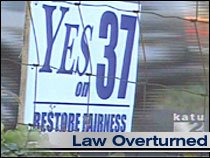 Oregon's land use laws are often seen as a model of how state and local communities can manage growth and improve quality of life. When Measure 37 passed last year, many planners and growth management proponents worried how it would hamper public planing efforts in the state.
Measure 37 requires that state and local governments either compensate land owners when regulations lower property values or waive the rules.
Now, Marion County Circuit Judge Mary James has ruled that the law violates five provisions of the state and federal constitutions.
Read a statement from 1000 Friends of Oregon . . .
A Prince who questions the status quo
 Prince Charles is visiting the U.S. these days. Often derided and always hounded by the media, there seems to be more to Charlie than his love life.
"I’ve been trying to encourage people to think about. … To break the conventional mold in the way we've been building and designing for the last, well, during the last century really, has all been part of a throw-away society,” he told a interviewer recently.
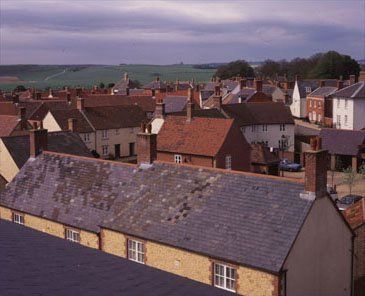
His alterternative vision is laid out in bricks and mortar in Poundbury, a village of 2,500 people, which he created on his land near Dorchester in the south of England. All his ideas on architectural design, class structure, aesthetics and ecology are here. And what he sees as the future looks very much like the past: an 18th century village adapted for the 21st.
Single-family homes are mixed with small apartments so there are people of all income levels here living side by side in a community with shops and light industry. The narrow twisty roads discourage automobile traffic, and cars are parked out of sight in landscaped lots.
“The whole of the 20th century has always put the car at the center,” the prince explained. "So by putting the pedestrian first, you create these livable places, I think, with more attraction, and interest and character. Livability."
Read the full interview . . .
Subscribe to:
Posts (Atom)